What Do the E-Numbers on Your Food Label Actually Mean?
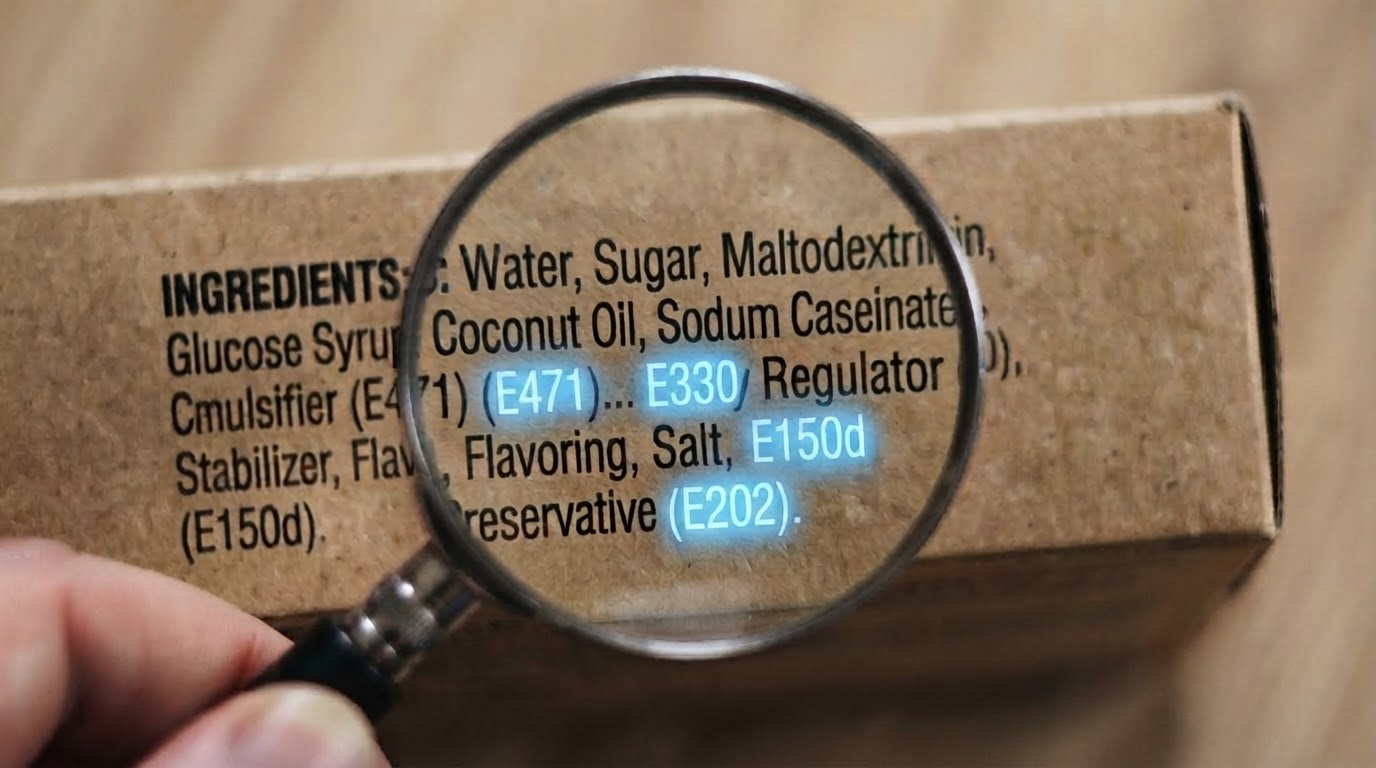
You turn a packet around and see something like E150d, E471, E330. It looks like chemistry class, so most people either ignore it or assume it's something artificial and "bad".
The reality is simpler, and more useful once you understand it. Here's a quick breakdown of the system. And if you'd rather just point your phone at a label and get the answer, Food Scan Go does exactly that.
What an "E" actually stands for
The "E" stands for Europe. It means the additive has been assessed and approved for use in food safety systems across the EU, and similar versions exist globally.
So an E-number is not a warning. It's a standard ID for a specific ingredient.
Example: E330 = citric acid, found naturally in lemons. The same molecule, whether the label spells it out or uses the code.
The numbers are grouped by function
The number tells you roughly what the additive does in food:
E100–E199: Colours
Colours make food look brighter or more consistent. They range from synthetic dyes that give sweets and soft drinks their vivid look to natural shades drawn from spices, fruits and vegetables.

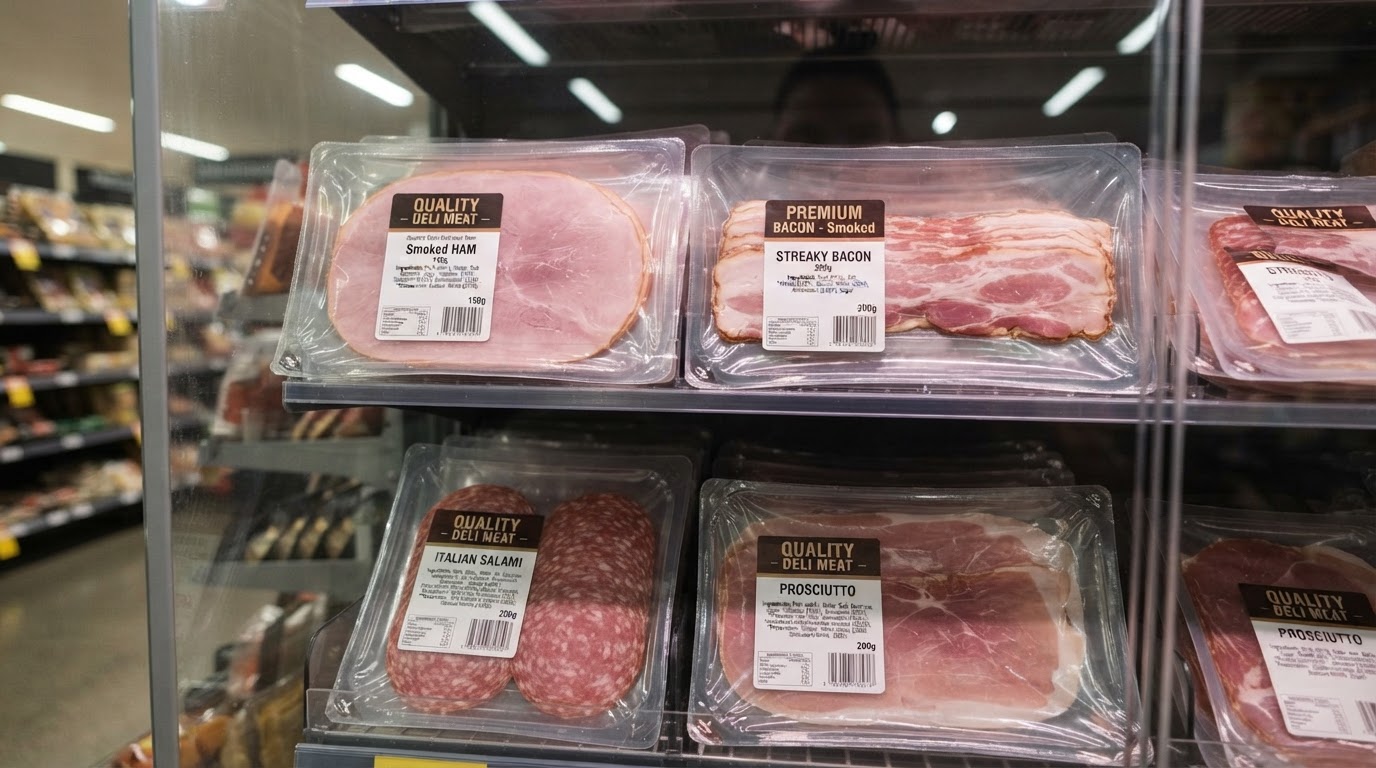
E200–E299: Preservatives
Preservatives fight the mould, yeast and bacteria that spoil food, which is how canned, jarred and packaged goods stay safe for months. They cover everything from mild organic acids to the curing agents that keep cured meats pink.
E300–E399: Antioxidants & acidity regulators
Antioxidants keep fats and oils from turning rancid, which is why they show up in cooking oils, crisps, breakfast cereals and margarine. Others in this range act as acidity regulators that hold flavour and colour steady, and some double as familiar nutrients.

E400–E499: Thickeners, stabilisers & emulsifiers
These control texture by thickening, stabilising and stopping ingredients from separating. It's why sauces stay smooth, yogurt stays creamy and low-fat spreads don't split. Some are drawn from plants, while others are emulsifiers that can come from either plant or animal fats.

E500–E599: Acidity regulators & anti-caking agents
This group keeps powders free-flowing and fine-tunes acidity, so flour, baking mixes and grated cheese don't clump and raising agents work properly.

E600–E699: Flavour enhancers
Flavour enhancers deepen the savoury, moreish taste in crisps, instant noodles, stock cubes and ready meals, boosting the sense of umami without adding much flavour of their own.

E900–E999: Sweeteners, gases & glazing agents
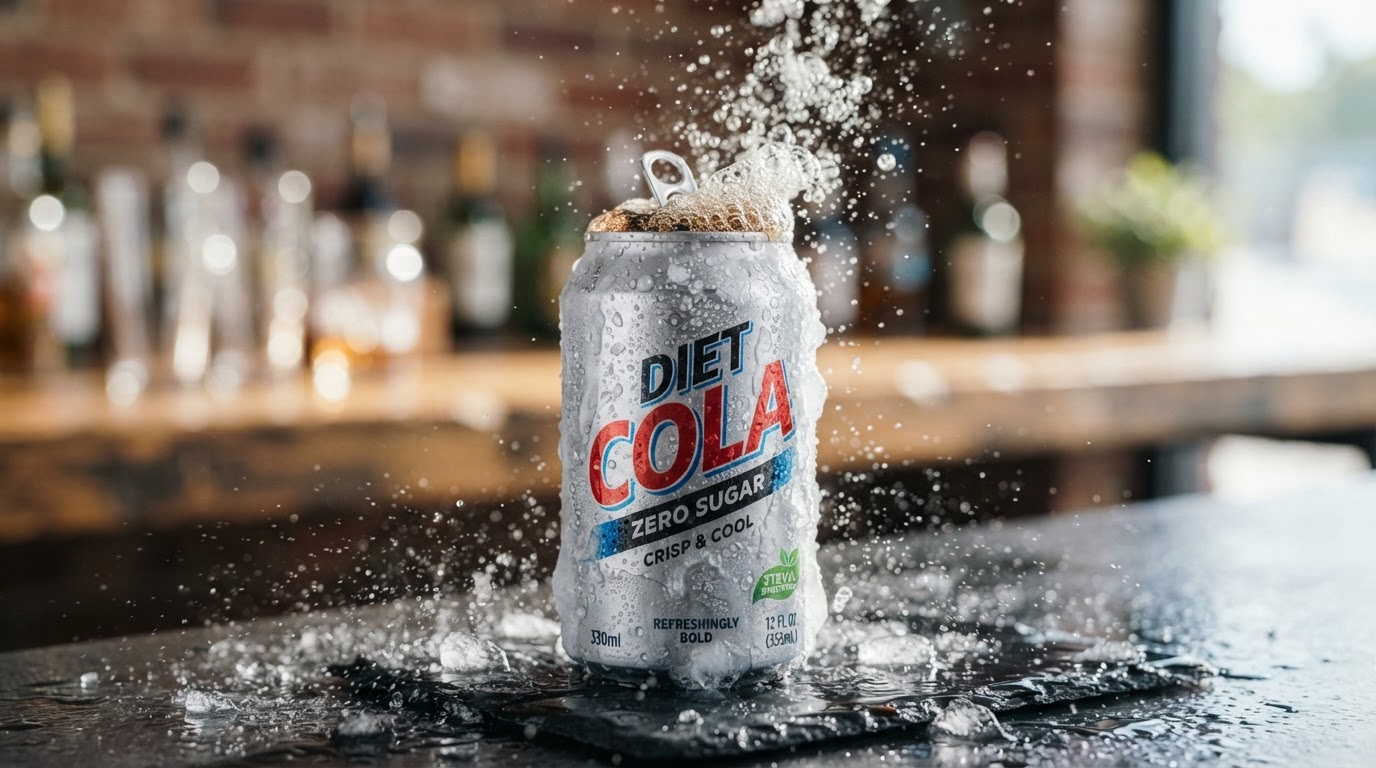
This range covers the sweeteners that replace sugar in diet drinks and sugar-free foods, the gases that add fizz or pressurise a can, and the glazing agents that give sweets and chocolates their shine.
E1000+: Additional additives
A catch-all for newer additives, including the modified starches (the E1400s) that thicken and stabilise sauces, soups, ready meals and low-fat products.
"Natural" and "additive" aren't opposites
Not all E-numbers are synthetic. Many come directly from natural sources such as fruits, vegetables, spices and seeds, the same ingredients you'd recognise in a kitchen.
At the same time, something without an E-number isn't automatically "healthier". The number simply means it's been standardised and approved for use.
When it's worth paying attention
Plenty of additives are harmless, but "approved for use" doesn't mean they're all equal. Some colours, preservatives and sweeteners have drawn more scrutiny than others, and a few carry official warnings or matter more for certain people.
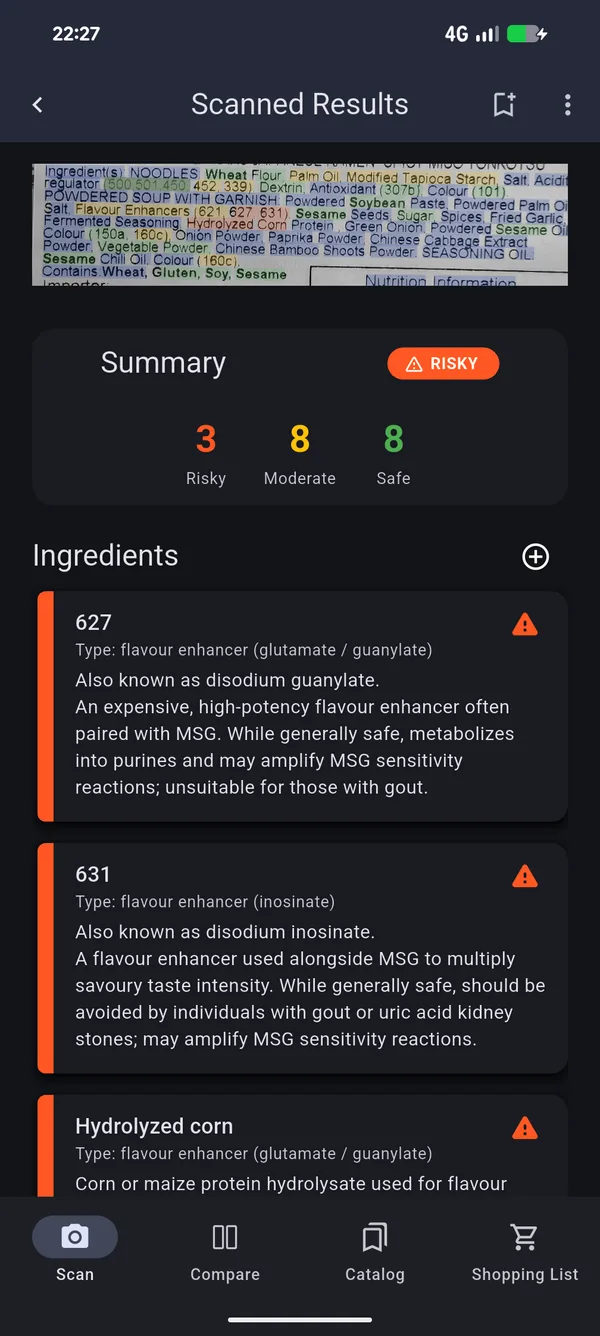
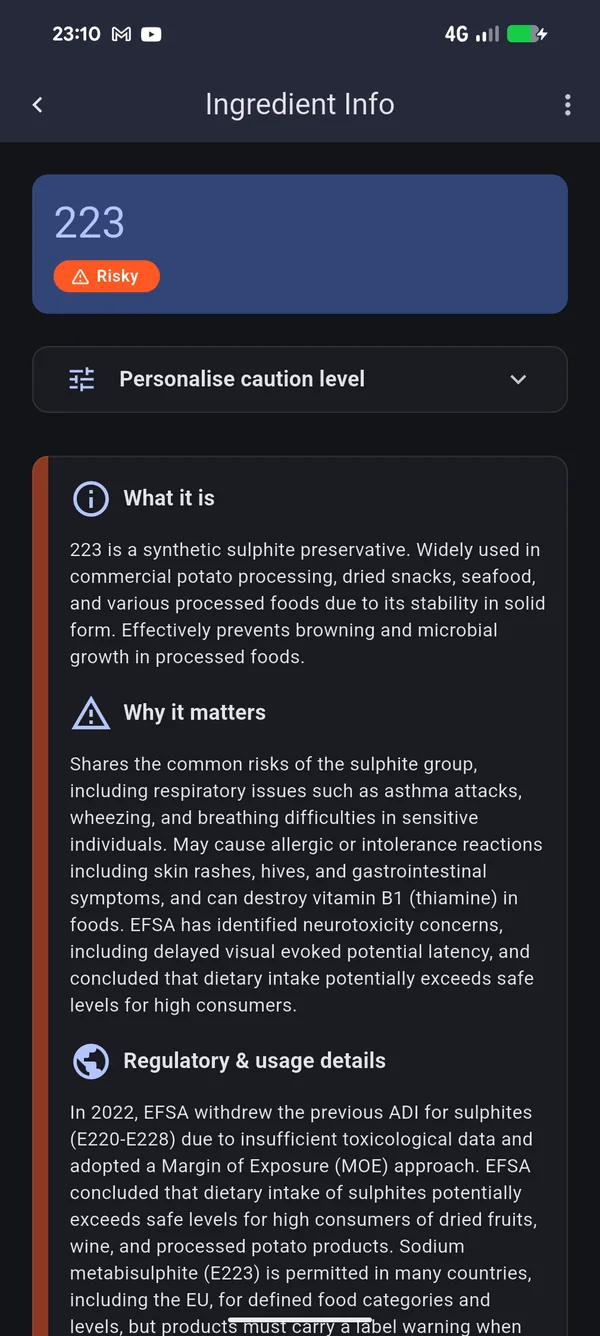
Rather than expecting you to memorise which is which, Food Scan Go grades every additive on a four-level scale (Safe, Moderate, Risky and Harmful) based on the current safety evidence. It also flags anything that acts as an allergen or affects a specific sensitivity, so the additives that matter to you personally stand out too.
The goal isn't to memorise all of this. It's to know what's risky in general and what matters for you specifically, and the app handles both automatically so you never have to cross-reference a list mid-shop.
How Food Scan Go helps
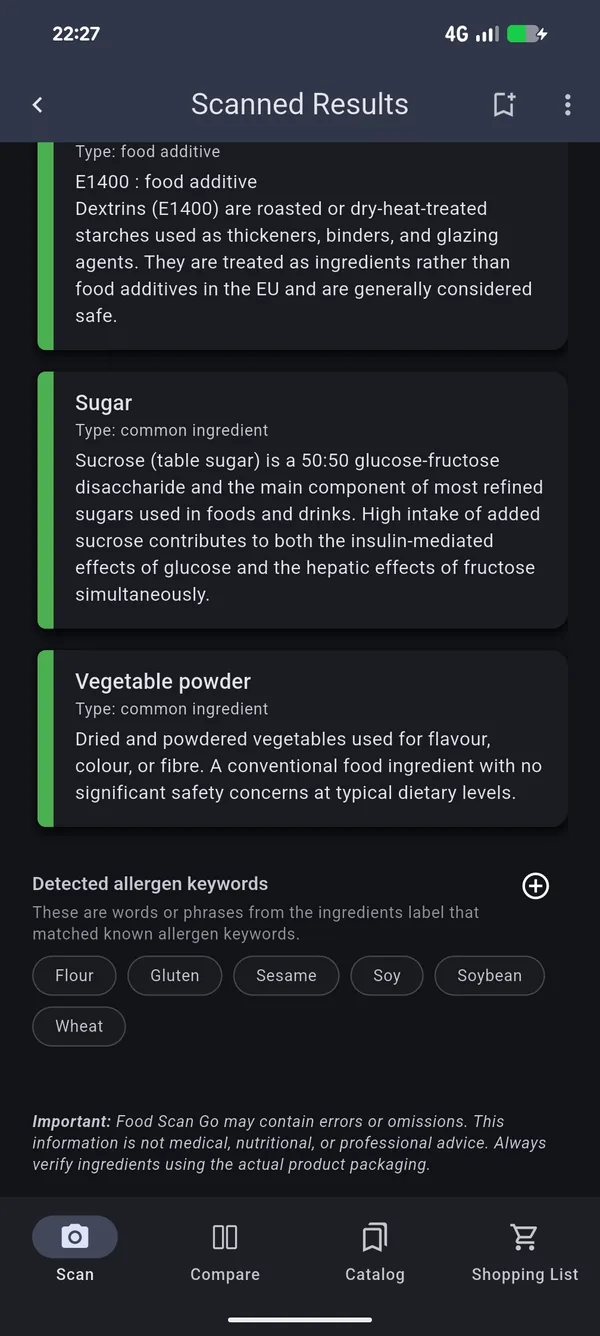
Scan any ingredients list and Food Scan Go tells you:
- What each E-number actually is: plain language, not code (E621 = MSG, a flavour enhancer)
- Why it's in the product: the job it does in that food
- What the safety evidence says: with links to trusted sources
- Whether it affects you: allergens and sensitivities flagged automatically based on your preferences
Everything is colour-coded by caution level (Safe, Moderate, Risky or Harmful), so the additives worth a closer look stand out immediately. No memorising ranges. No Googling mid-aisle.
The bottom line
E-numbers aren't a secret code. They're a system designed to make food ingredients consistent and traceable. Once you know how to read them, labels become much easier to understand.
And when you don't want to decode them yourself, that's exactly what Food Scan Go is for. Curious what's really in the foods you buy? Scan any label and try the app to find out more.
Decode any label in seconds
Scan ingredients, understand every additive, and make confident choices.